
What are the differences between animation for film/TV and video games?
Today, let’s talk about the differences between animation for film/TV and video games. They’re both about telling stories through animation, but they do it differently.
When you watch a movie or TV show, the creators set the scenes and angles to tell the story just right, and you just sit back and watch.
But in video games, you’re part of the action—you control what happens, so the animations have to be flexible and responsive. It’s like comparing a movie you watch to a game you play!
5 Differences between animation for film/TV and video games
Here’s a brief comparison table:
| Aspect | Film/TV Animation | Video Game Animation |
| Camera Angles | Fixed and controlled by creators | Multiple angles based on player control |
| Animation Structure | Sequential, fixed storyline | Cyclical, dependent on player actions |
| Control & Interactivity | Viewer has no control, passive experience | Player-controlled, highly interactive |
| Polygon Budget | High, allowing for detailed and complex models | Lower, optimized for real-time rendering |
| Technical Limitations | Minimal, can use powerful hardware and software | Significant, must run smoothly on consoles and computers |
| Programming Knowledge | Not required | Required for creating interactive and responsive actions |
| Error Detection | Easier to catch mistakes during production | Harder to identify glitches due to numerous interactions |
| Rendering Process | Pre-rendered, can be extensively edited | Real-time rendering, must be optimized for performance |
Now, I’ll discuss about the 5 main differences:
Camera Angles
In film and TV animation, camera angles are carefully planned by the creators. They decide exactly how each scene should look. This helps tell the story in a clear and controlled way. The viewer sees what the filmmakers want them to see.
In video games, camera angles are different. They change based on how the player moves and controls the character. The game can be in first, second, or third-person view, and each needs different angles.
Game animators have to make sure the animation looks good from all these angles. This makes the game feel immersive and responsive to the player’s actions. Film and TV animation is controlled and fixed, while game animation is flexible and interactive.

>>>Read more: What Software is Used for CGI Animation? Top 6 Options
Animation Structure
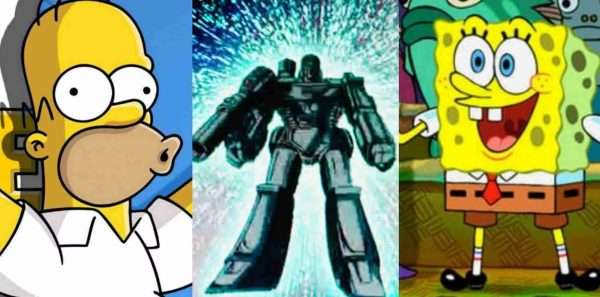
In film and TV animation, the structure is sequential. This means events happen in a fixed order, with each scene following a specific storyline.
There are no repeated cycles, as every moment is unique and designed to progress the plot. The viewer has no control over what happens next; the narrative unfolds as the creators intended.
In video games, the animation structure includes cycles. Characters have animations for actions like running, jumping, or attacking, which can repeat depending on the player’s choices. This allows for multiple scenarios and interactions within the game.
Each action must transition smoothly to the next, making the game feel natural and responsive. Therefore, while film and TV animation follow a linear path, video game animation must be versatile and adaptable to different player actions.
>>>Read more: Definition of CGI and How CGI Is Used in Animation
Control & Interactivity
In film and TV animation, control and interactivity are solely in the hands of the creators.
They design every scene, angle, and movement, ensuring the audience experiences the story exactly as intended. Viewers passively watch the narrative unfold without influencing it in any way.
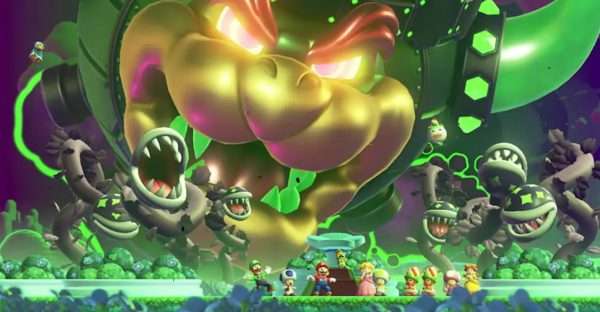
In video games, animation is highly interactive and controlled by the player. The player’s actions dictate the character’s movements and interactions within the game world.
This requires game animators to design animations that respond dynamically to user inputs and programmed AI scripts. Background elements and characters react to the player, creating a responsive and immersive environment.
Unlike the fixed control in film and TV, video game animation demands a flexible structure to accommodate various player-driven scenarios.
>>>Read more: What is 3D animation? Is 3D animation better than 2D animation?
Polygon Budget
The polygon budget refers to the resources allocated for creating detailed and high-quality animations.
In film and TV animation, the polygon budget is high. This means animators can spend a lot of money to make characters and scenes look very detailed. They can edit and improve the animation as much as they want because it doesn’t need to run in real time.
In video games, the polygon budget is lower. This is because games need to run smoothly on consoles and computers.
Game animators must make characters and scenes look good without using too many polygons. They have to balance detail and performance.
This means game animations are often less detailed than those in films and TV, but they are designed to work well during gameplay.

Technical Limitations
In film and TV animation, technical limitations are minimal. Animators can create highly detailed scenes and characters because they don’t need to worry about real-time rendering.
The animation can be edited and refined over time, using powerful software and hardware, to achieve the highest quality visuals. This allows for complex effects and detailed textures that enhance the storytelling.
In video games, technical limitations are significant. Animators must work within the constraints of game consoles and computers, which require real-time rendering. This means the animation must be optimized to run smoothly on various hardware.
Animators have to balance detail and performance, often using fewer polygons and simpler textures. They also need to ensure that the game can handle interactive elements and player inputs without lag.
Thus, game animation requires a careful balance to maintain both visual quality and playability, while film and TV animation can push for maximum visual detail without real-time constraints.
Conclusion
So, when it comes to animation for film/TV versus video games, they’re quite different in several ways. Film and TV stick to set camera angles and a fixed storyline, giving viewers a passive experience.
On the other hand, video games are all about interaction—the player controls the action, which means animations have to be flexible and work in real time.
Film/TV can go all out with detail, while games have to balance that with what consoles can handle. It’s like comparing a scripted movie to a choose-your-own-adventure game!
–
Animost – Vietnam 3D Animation Studio


hello@animost.com

More from the stage
Sep 15, 2026Behind the Scenes of HOPE Na Hong-jin Sci-Fi Action with Motion Capture
If you love wild action movies, high-stakes science fiction, and cinema that keeps your heart pounding, South Korean filmmaker Na Hong-jin’s latest project, HOPE, needs to…
Do I Own the Copyright to AI-Generated Animation?
Do you own the copyright to AI-generated animation? Learn how AI, human creativity, and platform rules affect ownership and commercial rights.
Start a project
Tell us what you need made.
Send us the details and we will come back within one business day with a scope and a price.
Start a project