Do I Own the Copyright to AI-Generated Animation?
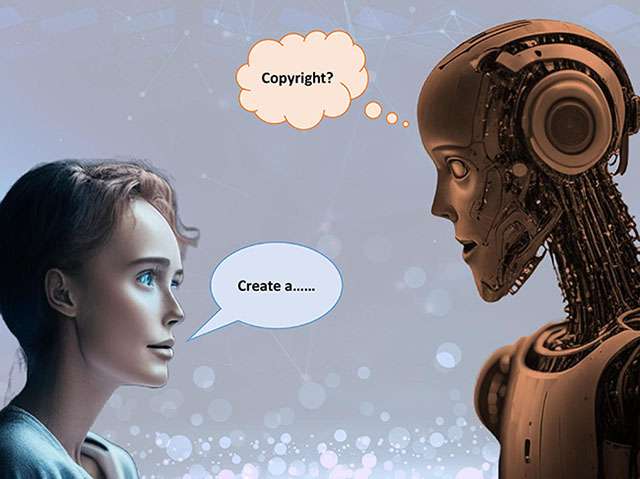
Once the animation is finished and you start thinking about uploading it, selling it, or using it for a client, a serious question hits: Do I own the copyright to AI-generated animation?
This isn’t just a legal curiosity. Copyright affects whether you can sell your animation, protect it from being reused, license it to clients, or even claim it as your own creative work. And unfortunately, the answer isn’t as simple as “yes” or “no.”
In most cases, the real answer is: it depends on how the animation was made, how much creative control you had, and where you live.
Let’s break it all down!
Why Copyright Law Struggles With AI Animation
Copyright law was built for humans. Painters, writers, filmmakers, animators, real people making creative choices. AI doesn’t fit neatly into that system because it doesn’t think, imagine, or express ideas the way humans do. It generates results based on patterns in data.

Because of that, copyright law keeps coming back to one core question: Who is the author?
In traditional animation, the author is obvious. It’s the animator or the studio. In AI-generated animation, things get blurry. Is the author the person who wrote the prompt? The company that built the AI model? Or is there no author at all?
This uncertainty is why AI-generated animation sits in a legal gray zone almost everywhere in the world.
>>> Read more: Is Using AI to Make Animation Illegal? A Deep, Honest Breakdown for Creators
The Importance of Human Authorship
One concept shows up again and again in copyright law across different countries: human authorship.
In many legal systems, copyright only exists if a human made creative decisions that shaped the final work. If there is no human author, then there may be no copyright protection at all.
That’s where AI-generated animation becomes tricky. If an animation is created entirely by an AI system, with no meaningful human creative input, many copyright authorities say that the work simply isn’t eligible for copyright.
This doesn’t mean the animation is illegal to use. It just means that no one truly owns it in a legal sense.
>>> Read more: The Future of Animation Technology: Motion Capture AI
How the United States Views AI-Generated Animation
If you distribute content globally or work with international clients, U.S. copyright law matters a lot.
The U.S. Copyright Office has taken a very clear stance: copyright protects human-created works only. If an animation is generated entirely by AI, it cannot be copyrighted.

Writing prompts, choosing styles, or clicking “generate” usually isn’t enough. From a legal perspective, those actions are seen as instructions, not authorship. The AI is still doing the actual creative work.
However, the situation changes when you start adding real creative input.
If you edit the animation manually, adjust timing, refine motion, combine multiple AI-generated clips into a cohesive story, or add original elements that reflect your own creative choices, then those human-created parts may be eligible for copyright protection.
In other words, in the U.S., AI-generated animation alone isn’t protected, but AI-assisted animation can be.
>>> Read more: Animation Cost Calculator: How Much Is Animation Gonna Cost You?
How Other Countries Handle Copyright and AI
Outside the U.S., things get even more complex.
In the United Kingdom, copyright law includes a unique provision for computer-generated works. If a work is created by a computer and there is no human author, the law considers the “author” to be the person who made the arrangements necessary for the creation of the work. In theory, that could mean you own the copyright to AI-generated animation in the UK. In practice, however, this rule hasn’t been tested much in modern AI cases, so there’s still uncertainty.
Across the European Union, most countries require a human author and a level of originality that reflects human creativity. Fully AI-generated animation usually doesn’t qualify. But if you significantly modify or creatively shape the output, you may gain copyright over those contributions.
Other regions, such as Japan and China, are actively discussing how to adapt copyright law for AI. Some courts have already recognized copyright in AI-assisted works where human involvement is clear. Still, there is no global standard, and the rules can change quickly.
So when you ask, “Do I own the copyright to AI-generated animation?”, the honest answer is that ownership can vary depending on where the animation is created and used.
Why AI Tool Terms of Service Matter More Than You Think
Even if copyright law seems to support ownership, the terms of service of the AI tool you’re using can override everything.
Every AI animation platform has its own licensing rules. Some platforms allow you to own the output and use it commercially without restrictions. Others give you broad usage rights but still retain ownership themselves. Some even reserve the right to reuse your animations for training, marketing, or internal purposes.

This means that even if the law says you might own the animation, the platform’s contract could say otherwise, and contracts usually win.
That’s why reading the terms of service isn’t optional anymore. If the platform says you don’t own the output, then legally, you don’t, regardless of how creative the result feels.
The Crucial Difference Between AI-Generated and AI-Assisted Animation
This distinction is one of the most important things to understand if you care about copyright.
AI-generated animation usually means you enter a prompt and the system produces a finished animation with little or no creative input afterward. In these cases, ownership is weak or nonexistent, especially in countries that require human authorship.
AI-assisted animation is different. Here, AI acts like a tool, similar to motion capture software or procedural animation systems. You make creative decisions, guide the process, refine the results, and shape the final animation. In these workflows, you are clearly the author, and the AI is just helping you execute your vision.
If copyright ownership matters to you, AI-assisted animation is almost always the safer path.
How Much Human Creativity Is “Enough”?
There’s no universal rule that defines how much human input is required, but copyright authorities tend to look at creative control and decision-making.

If you’re choosing camera angles, adjusting motion curves, editing timing, assembling scenes, and shaping the story, your creative fingerprint is visible. That strengthens your claim to ownership.
On the other hand, if you rely entirely on automated generation with minimal involvement, it becomes much harder to argue that the animation reflects your personal creative expression.
The more intentional your creative choices are, the stronger your copyright position becomes.
Selling and Licensing AI-Generated Animation
You can usually sell AI-generated animation, especially if the platform allows commercial use. Many creators already do this for marketing videos, social media content, and digital assets.
However, selling doesn’t automatically mean owning.
If the animation isn’t protected by copyright, you may not be able to offer exclusivity to clients. Someone else could legally use the same or a very similar animation, and you might have no way to stop them.
This is why many studios and agencies limit AI usage to internal workflows rather than final deliverables.
Can Someone Legally Copy Your AI Animation?
In some cases, yes.
If the animation has no copyright protection, there may be nothing stopping others from reusing it. This can be shocking for creators who assume that effort alone guarantees ownership.
This risk is especially important for brands, studios, and anyone building long-term value around original content.
Copyright Registration and Transparency
In countries that allow copyright registration, such as the United States, you must be transparent about AI involvement. You can’t claim authorship over parts created entirely by AI.

Failing to disclose AI use can invalidate your registration later, which can cause serious legal problems if disputes arise.
Being honest about how the animation was created protects you in the long run.
Looking Ahead: The Future of AI Animation Copyright
Copyright law is evolving, but slowly. Governments and courts are still trying to balance innovation with creator protection.
In the future, we may see new categories of rights, clearer AI-specific rules, or international agreements that define ownership more clearly. For now, uncertainty is part of the landscape.
Final Answer: Do I Own the Copyright to AI-Generated Animation?
Here’s the most realistic answer we can give right now.
If an animation is created entirely by AI, you often do not own the copyright. If you use AI as a tool and add meaningful human creativity, you likely own the copyright at least over the parts you created.
Platform terms, local laws, and your level of involvement all matter. The safest approach is to treat AI as a powerful assistant, not a replacement for human creativity.
Because in today’s legal world, you own what you create, not what the AI creates on its own.
–
Animost – Vietnam 3D Animation Studio


hello@animost.com

More from the stage
Sep 15, 2026Behind the Scenes of HOPE Na Hong-jin Sci-Fi Action with Motion Capture
If you love wild action movies, high-stakes science fiction, and cinema that keeps your heart pounding, South Korean filmmaker Na Hong-jin’s latest project, HOPE, needs to…
What Are the Limitations of Motion Capture? A Deep Look for Creators
What are the limitations of motion capture? We break down the real challenges, from cleanup time issues to cost, realism limits, and more.
Start a project
Tell us what you need made.
Send us the details and we will come back within one business day with a scope and a price.
Start a project