Behind the Scenes of HOPE Na Hong-jin Sci-Fi Action with Motion Capture
Behind the Scenes of HOPE Na Hong-jin Sci-Fi Action with Motion Capture
If you love wild action movies, high-stakes science fiction, and cinema that keeps your heart pounding, South Korean filmmaker Na Hong-jin’s latest project, HOPE, needs to be at the top of your watch list. Known for his intense narrative style and relentless pacing, HOPE Na Hong-jin motion capture brings together classic action and sci-fi chaos in a story set in a fictional harbor town right near the Korean Demilitarized Zone (DMZ).
Visual effects (VFX) were essential for building these otherworldly monsters and fitting them into the environments. But Director Na was equally determined to make every single scene feel physical, gritty, and grounded. Thanks to some of the most frenetic camera work in recent cinema history, the movie puts you right in the middle of the action.
Designing Unique Aliens for HOPE Na Hong-jin Sci-Fi Action with Motion Capture
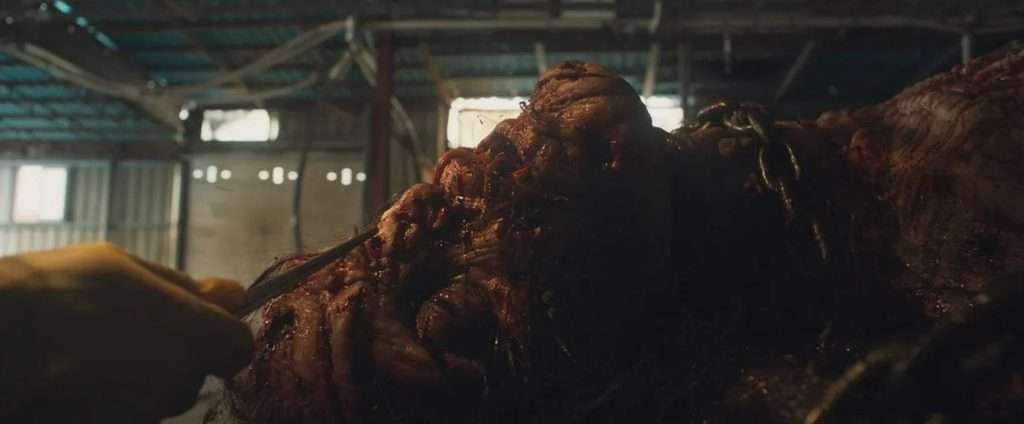
When it comes to monster movies, seeing the exact same alien design over and over again gets old fast. Director Na Hong-jin wanted to break away from standard Hollywood tropes and make sure the aliens in HOPE looked completely distinct from one another. In the movie, their appearances span a wide spectrum, ranging from tentacled abominations to humanoid-like forms. They also appear visibly injured, beaten-up, and weathered. These ties back to their rough crash-landing on Earth.
Narrative-Driven Creature Concepts
Each alien has a distinct visual identity for a specific narrative reason. Director Na explained that these creatures actually hail from entirely different home planets. They only stand together because they are united in a single shared cause when they meet on Earth.
As the core mystery of HOPE unfolds step-by-step, the physical appearance of the monsters directly helps drive the story forward. For instance:
- The First Creature: Almost completely formless, preventing the audience from identifying what it actually is right away.
- Progressive Shapes: As more creatures show up, their structural designs drop subtle narrative clues that feed into the overall mystery.
Though early concept art aimed for realistic creature designs, the creative direction shifted over time. The film crew wanted something fun, innovative, and noticeably different from typical western sci-fi monsters. To achieve this, they stepped outside traditional American creature design frameworks, choosing to highlight Asian-inspired line work and aesthetic details.
Backstories and Monstrous Shifts
Narratively, these creatures carry deep, unwritten backstories. Even though they didn’t fully spell their pasts out on screen, the designs convey that these beings had entire lives, social hierarchies, and dedicated missions long before landing in Korea.
One of the standout designs belongs to the alien leader Ma’veyyo, played by Michael Fassbender. Normally walking on two legs, Ma’veyyo can transform into a four-legged quadruped whenever he goes on the attack. One of the most striking slow-motion shots in HOPE captures Ma’veyyo in this quadruped state, lunging out to bite at two characters riding horseback. Director Na noted that this transformation mechanism was planned from day one. Influenced by Ridley Scott’s Alien alongside various classic creature features, the artist designed it not as a robotic, mechanical shift, but as a grotesque biological evolution.
Read more: The King of Kings
Shooting Insane, High-Speed Action Scenes
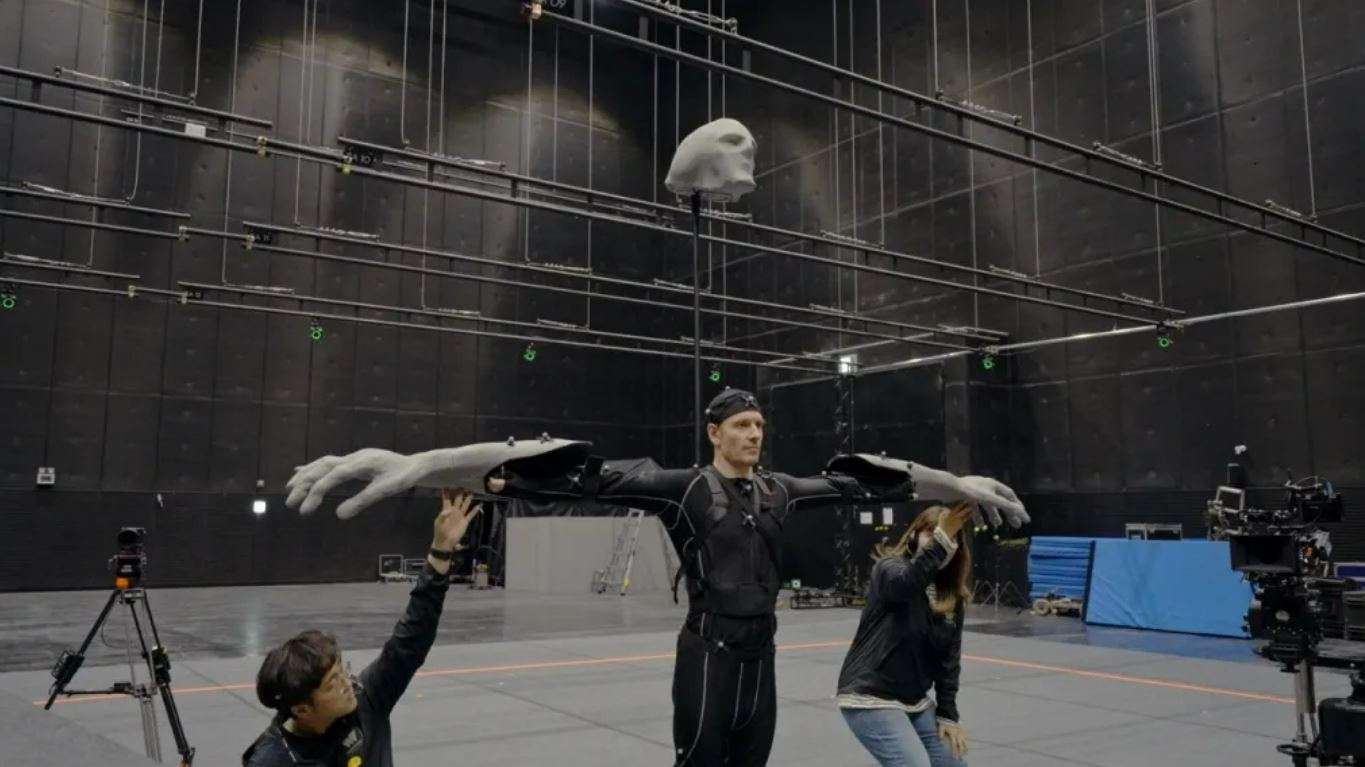
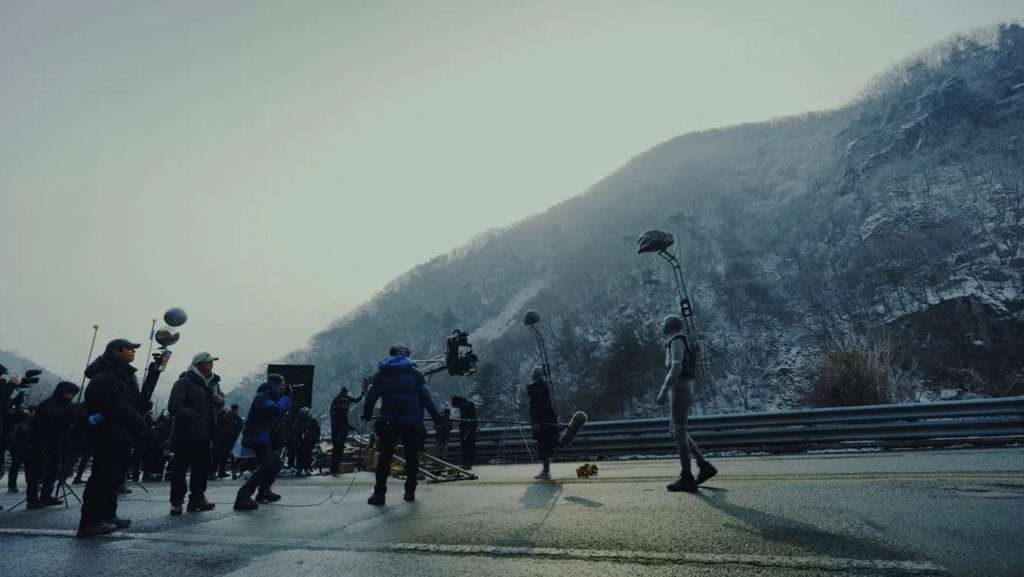
Executing high-intensity sci-fi action on set takes serious coordination, especially when giant CG monsters are involved. To film these sequences, the production team initially used practical stand-in stunt performers and dummy models on set. Later on during post-production, lead actors like Michael Fassbender and Alicia Vikander performed the actual alien movements on a specialized motion capture stage.
Equally as impressive as the CGI creatures themselves are the sheer scale and variety of the action setups throughout HOPE. The movie continuously shifts locations and escalates its set-pieces:
- High-octane police car pursuits tearing down public streets.
- Terrifying sequences of aliens ripping through the town center.
- High-speed chases cutting across rugged mountain forests and connected roadways.
To carefully plan every complex maneuver, Director Na and his team relied heavily on detailed storyboards and pre-visualization (previs) animations. A primary goal during filming was keeping the camera extremely close to the actors to maintain an intimate, thrilling perspective.
Custom Rigs and Dangerous Stunts
To pull off these tight shots during live-action filming, the crew used an array of advanced camera rigs provided by the specialist gear company XM2. They utilized custom e-bikes equipped with:
- Mechanical camera arms
- Remote-controlled sliders
- Acustom remote camera car nicknamed “Charlie”
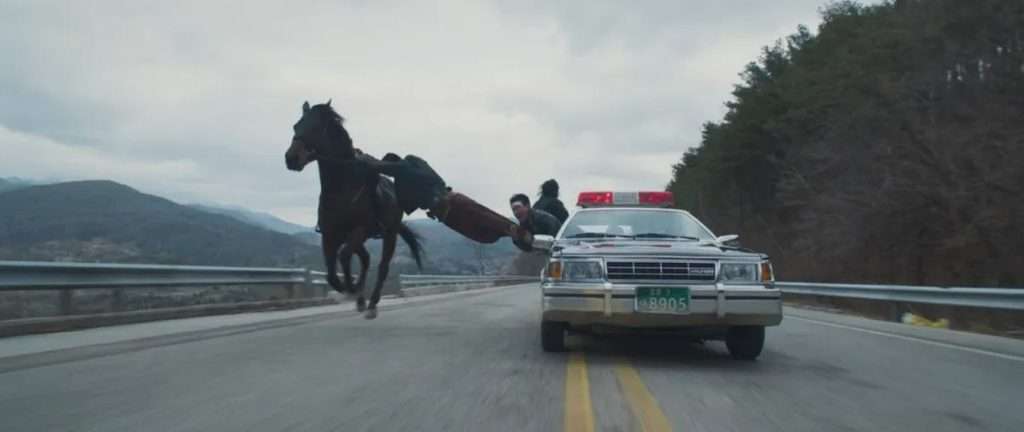
Getting these dynamic shots required immense technical creativity because cameras had to be physically mounted to rapidly moving objects. The crew regularly attached custom camera rigs to vehicles and even live horses, with around 12 horses and cars kept on standby throughout filming. At times, camera lenses were positioned merely a foot away from charging horse hooves. It’s a process that required total trust between Director Na, his Director of Photography (DP), the camera operators, and the fearless stunt team.
Practical Effects on Real Locations
Making matters even tougher, HOPE opted to shoot these extreme action sequences on real locations instead of relying entirely on controlled indoor sound stages. For scenes set in the harbor town, a large green destruction rig (a “green buck”) was physically driven down real streets. This is to smash through physical objects and leave genuine debris in its wake. Practical special effects (including real explosions) were detonated live on set as the cameras rolled. This way, the film got its grounded, violent energy.
Combining Motion Capture and Visual Effects
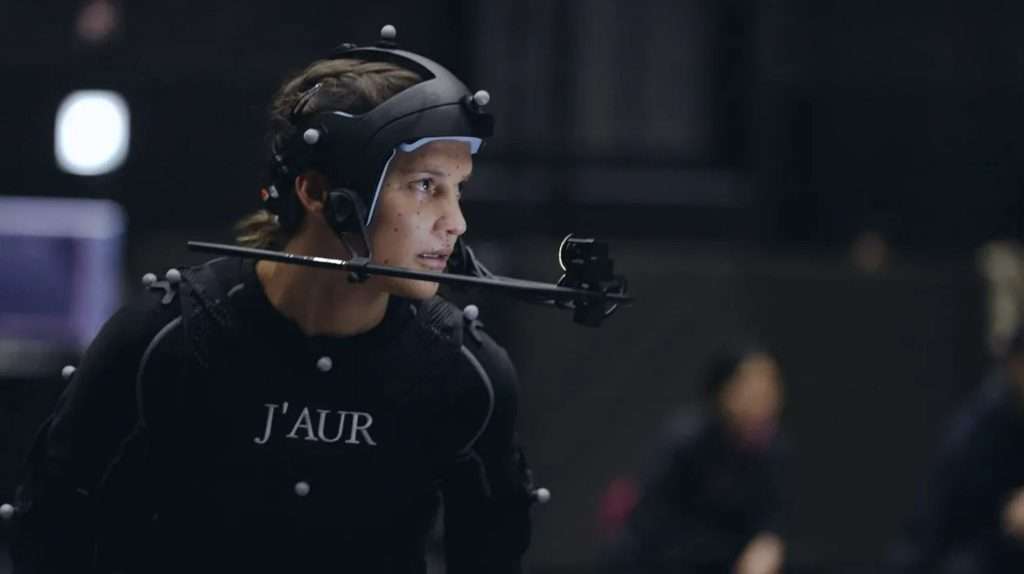
When assembling early cuts of the film, Director Na relied heavily on the physical stand-in plates and dummy footage. The true performance work came during the subsequent motion capture phase. During these shoots, key actors like Alicia Vikander and Michael Fassbender wore full-body mocap suits alongside Head-Mounted Cameras (HMCs) to record every subtle facial expression.
Director Na praised the mocap process, calling his time working with Vikander and Fassbender both seamless and deeply rewarding. By referencing the rough previs edits on set, the actors knew precisely what actions were happening around them. Na was particularly impressed by how flawlessly the actors memorized and delivered constructed alien lines, proving their high-level professionalism.
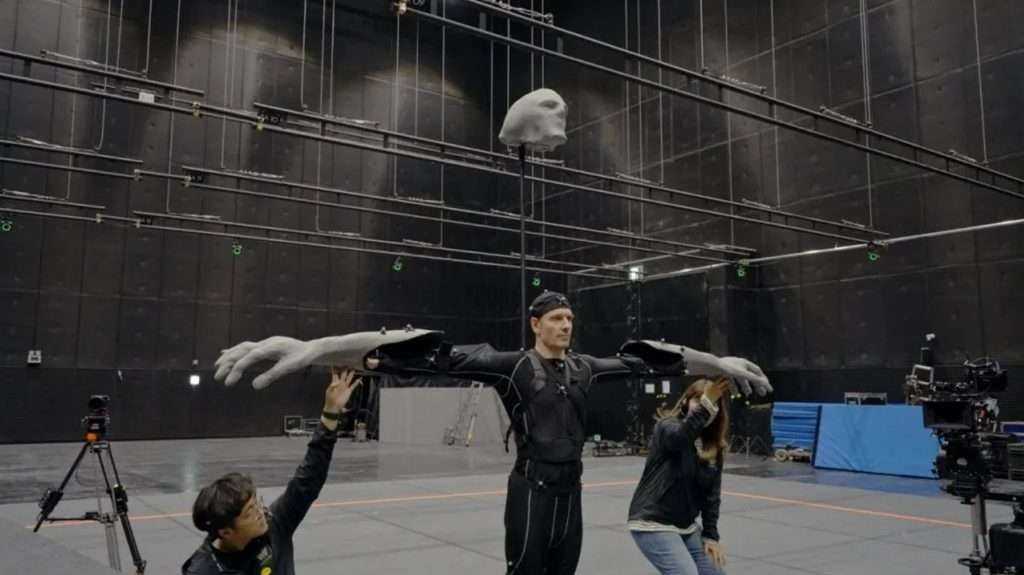
Capturing facial nuances was vital. Human faces feature micro-movements, and translating those tiny details onto the digital creature models gave the VFX team tremendous creative freedom. It enhanced the aliens’ speed, fluidity, and emotional expression, making their reactions feel grounded and real on screen.
The VF workload was led by the team at Westworld, who faced unique challenges regarding scale and motion. Normally, massive cinematic monsters move deliberately and slowly to convey weight. However, in HOPE, the aliens move at blistering speeds.
In typical live-action shots, viewers don’t get thrown off by motion blur because humans naturally understand human shapes, even when they’re moving fast. But with entirely foreign alien shapes running at breakneck speeds, heavy motion blur can easily distort the creature’s silhouette and confuse the audience. Finding the perfect balance between realistic motion blur and clear visual detail was one of the biggest hurdles the VFX crew successfully conquered.
Conclusion: Why HOPE Sets a New Standard for Action Sci-Fi
By blending practical stunts, innovative camera technology, and top-tier motion capture performances, HOPE stands out as a unique cinematic achievement. Director Na Hong-jin’s vision proves that sci-fi creature features don’t have to choose between CGI spectacle and gritty, real-world action. With its distinct Asian-inspired creature designs, grounded physical stunts, and performance work from Alicia Vikander and Michael Fassbender, HOPE delivers a thrilling experience for movie fans worldwide.
Source: beforeandafter

More from the stage
Jan 7, 2026Do I Own the Copyright to AI-Generated Animation?
Do you own the copyright to AI-generated animation? Learn how AI, human creativity, and platform rules affect ownership and commercial rights.
What Are the Limitations of Motion Capture? A Deep Look for Creators
What are the limitations of motion capture? We break down the real challenges, from cleanup time issues to cost, realism limits, and more.
Start a project
Tell us what you need made.
Send us the details and we will come back within one business day with a scope and a price.
Start a project