
15 Character Animation Tips to Create Lifelike Animations
Character animation is a powerful medium for bringing stories and ideas to life. The following character animation tips will help you refine your skills and produce realistic animations that resonate with your audience.
Whether you’re creating animations for entertainment, education, or marketing, the ability to craft lifelike characters is crucial.
What is Character Animation?

Character animation is the art of breathing life into digital characters by making them move, think, and feel within a 2D or 3D space.
This process involves much more than simply making a character walk or talk; it’s about creating the illusion of personality, emotion, and intent.
Over the years, the field has evolved from hand-drawn sketches to complex rigging and motion capture, with advanced tools enabling animators to craft highly detailed and realistic animations.
>>> Read more: 10 storyboarding tips for creating animation film learnt from Pixar film Coco
15 Character Animation Tips
Here’s a detailed breakdown of the 15 essential character animation tips to create lifelike and engaging character animations:
#1. Understand Movement Intentions of Character Animation

Understanding movement intentions is a key character animation tip to creating believable animations. This involves knowing why a character is moving in a certain way; and what emotions or motivations drive their actions.
By delving into the psychology behind each movement, animators can ensure that their characters’ actions align with their personalities, emotions, and the context of the scene.
>>>Read more: The choice to move to real-time animation production workflow of an Asian director
#2. Draw Inspiration from Real Life
Real-world observation is an invaluable resource for animators. To create realistic animations, study how people move, express emotions, and interact with their environment. Use your movements or those of others as references.
This real-world inspiration can be especially helpful when animating subtle details like facial expressions, body language, and reactions.
>>>Read more: 10 Pro Tips to Create 3D Animation Portfolio for 3D Artists
#3. Master the Effects of Gravity

Gravity plays a crucial role in how characters move. Understanding how different body types and masses interact with gravity can significantly enhance the realism of your animations.
For example, a heavier character may have slower, more grounded movements, while a lighter character might move more quickly and with greater agility.
#4. Perfect the Timing of Movements
Timing is one of the most powerful tools in an animator’s toolkit. The pace at which a character moves can convey a wide range of emotions and intentions.
For instance, quick, sharp movements often indicate excitement or urgency, while slower, deliberate movements can suggest thoughtfulness or sadness.
#5. Focus on Body Language of Character Animation

Body language is a crucial element in defining a character’s personality and emotional state. Every movement, from a subtle hand gesture to a dramatic pose, communicates something about the character.
To create believable animations, pay close attention to how body language reflects the character’s feelings and intentions.
For example, a character who is confident may stand tall and make expansive gestures, while a character who is nervous might shrink into themselves or fidget.
#6. Save Basic Animations for Future Use
Creating a library of basic animations, such as key poses and common movements, can save you time and effort in future projects.
These saved animations can serve as a foundation for new animations, allowing you to quickly build upon established movements and maintain consistency across your work.
#7. Incorporate Action, Reaction, and Anticipation

Effective animation is all about the flow of movement, and three key elements—action, reaction, and anticipation—are essential to achieving this flow.
Action refers to the main movement, reaction is the response to that movement, and anticipation is the preparatory motion that precedes the action.
For example, before a character jumps, they might crouch down (anticipation), then leap (action), and finally land with a stagger or a smooth landing (reaction).
#8. Offset Keyframes for Fluid Motion
Offsetting keyframes is a technique used to create more natural and fluid movements. Instead of moving all parts of the character simultaneously, you slightly delay the movement of different body parts.
This creates a more organic flow, similar to how real bodies move. For example, when a character waves their hand, the movement might start at the shoulder, followed by the elbow, and then the wrist.
#9. Observe Real People for Character Animation

Creating key poses early in the animation process helps establish the structure and timing of your scenes. Key poses are the main positions that define the action, and they serve as the foundation for the entire animation.
By starting with these crucial poses, you can ensure that the animation flows smoothly and that the timing is effective.
Once the key poses are in place, you can focus on refining the in-between frames and adding details to enhance the overall quality of the animation.
#10. Record Your Movements for Character Animation
Recording yourself performing specific actions can provide valuable reference material for your animations. By studying your movements, you can gain a better understanding of the nuances of human motion.
This method allows you to analyze the timing, weight distribution, and subtle gestures that might be difficult to capture otherwise.
#11. Create Key Poses Early
Creating key poses early in the animation process helps establish the structure and timing of your scenes. Key poses are the main positions that define the action, and they serve as the foundation for the entire animation.
By starting with these crucial poses, you can ensure that the animation flows smoothly and that the timing is effective.
Once the key poses are in place, you can focus on refining the in-between frames and adding details to enhance the overall quality of the animation.
#12. Minimize Lip Movements
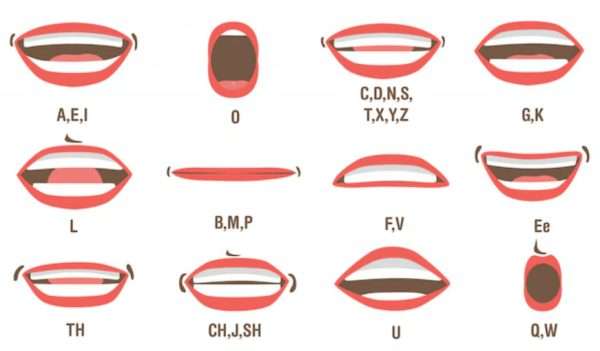
When animating speech, it’s often more effective to use minimal lip movements rather than trying to animate every syllable.
Over-articulating can make the character’s speech look unnatural and distract from the overall performance. Instead, focus on key mouth shapes and subtle movements that match the general sound of the dialogue.
#13. Simplify Your Rig
A simple, well-designed rig can greatly enhance the animation process. A rig is a skeletal structure that controls the character’s movements, and a complex rig can make the animation process cumbersome.
By simplifying the rig and focusing on the essential controls needed for your character, you can streamline your workflow and make it easier to animate complex scenes.
#14. Maintain Character Balance
When a character moves, their center of gravity should shift accordingly to maintain balance. For example, when a character leans forward, their weight should shift to their front foot, and their posture should adjust to keep them stable.
#15. Start with a Basic Model
Working with a high-resolution model can be challenging and time-consuming, especially in the early stages of animation. To streamline the process, start with a basic 3D model to block out the animation.
This allows you to focus on the overall movement and timing without getting bogged down in details. Once the basic animation is in place, you can gradually add detail to the model, refining the animation as you go.
Conclusion
By applying these 15 character animation tips, you’ll be well on your way to creating lifelike and engaging character animations.
Remember, practice and observation are key to mastering the art of animation. Start experimenting with these techniques and watch your animations come to life!
–
Animost – Vietnam 3D Animation Studio


hello@animost.com

More from the stage
Sep 15, 2026Behind the Scenes of HOPE Na Hong-jin Sci-Fi Action with Motion Capture
If you love wild action movies, high-stakes science fiction, and cinema that keeps your heart pounding, South Korean filmmaker Na Hong-jin’s latest project, HOPE, needs to…
Do I Own the Copyright to AI-Generated Animation?
Do you own the copyright to AI-generated animation? Learn how AI, human creativity, and platform rules affect ownership and commercial rights.
Start a project
Tell us what you need made.
Send us the details and we will come back within one business day with a scope and a price.
Start a project