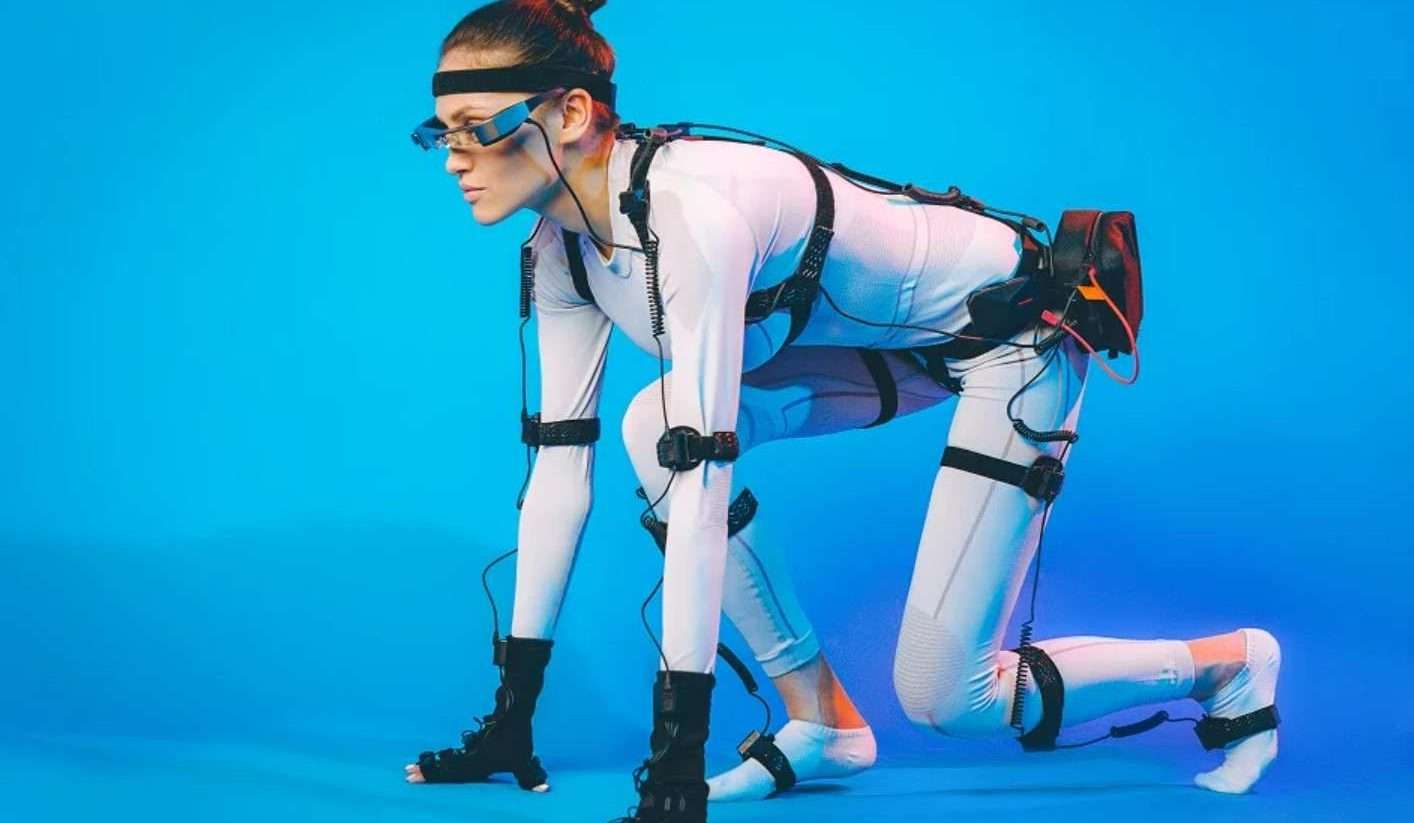
4 Main Types Of Motion Capture Systems You Should Know
Motion capture systems are used to record and analyze movement, and there are four main types you should know about. Each type has its way of capturing data, and they’re used in different fields like movies, sports, and robotics.
Whether you’re looking to create amazing animations, improve athletic performance, or advance technology, understanding these systems will help you pick the right one for your needs. Keep scrolling to learn more!
What Is The Technology Of Motion Capture System?

Motion capture (mocap) is a technology used to record the movement of people or objects and turn it into digital data. It started with studying how people walk in life sciences but is now used in many areas.
In film and video games, mocap helps create realistic animations. Sports therapists use it to analyze athletes’ movements and improve their performance. Neuroscientists use it to study how the brain controls movement.
It is also important for testing and improving computer vision and robotics, making sure they work correctly. Overall, mocap helps us understand and create detailed movement data in various fields.
>>>Read more: What is Motion Capture?
4 Types Of Motion Capture Systems
Now, let’s explore each type in detail to see how they work and where they are best applied!
Magnetic Systems
Magnetic motion capture systems use magnetic sensors to track how objects move.
Unlike optical systems that need cameras and light, these systems create and detect magnetic fields to find the position and movement of sensors attached to a person or object.
This makes them useful in places with poor or changing light since they don’t rely on visibility.
These systems are often used in industrial settings, such as factories and robot-controlled environments.
In factories, they help monitor machines and tools to ensure everything works correctly and safely. In robotics, they track the precise movements of robot arms, improving the accuracy of tasks.
However, magnetic motion capture systems have some limitations. They don’t work as well over long distances; the further you get from the source, the less accurate they become.
Additionally, nearby metal objects or electronic devices can interfere with the magnetic fields, causing tracking errors.
Despite these drawbacks, magnetic motion capture systems are still very valuable. Their main advantage is that they aren’t affected by light or the surroundings, making them reliable in challenging conditions.
>>>Read more: Important things to know when implementing Motion Capture with a budget
Vision-Based Systems

Vision-based motion capture systems are advanced technologies that track movement without needing the user to wear special suits or markers. Instead, these systems rely on a network of cameras positioned around a scene.
These cameras capture the action from multiple angles, and the system then translates the 2D footage into a 3D motion file. This process allows for a detailed and accurate representation of movement.
One of the main advantages of vision-based motion capture is its convenience. Since users don’t need to wear any special equipment, the setup is more comfortable and less intrusive.
This makes it ideal for applications where natural movement is important, such as in sports analysis, film production, and video game development.
However, vision-based systems have significant challenges. They require a large amount of data from multiple cameras, which needs extensive processing to create accurate 3D models.
This processing can take a lot of time, making these systems less suitable for real-time applications.
For example, while they are excellent for creating detailed animations in post-production, they are not as effective for live performances or interactive applications where instant feedback is necessary.
>>>Read more: Is Motion Capture Expensive? How To Reduce The Cost Of Motion Capture?
Inertial Systems

Inertial motion capture systems track movements using accelerometers, gyroscopes, and magnetometers. These sensors measure speed, orientation, and direction.
The systems are small and portable, making them great for use in remote or tough environments where other systems might not work well.
These systems are easy to carry and set up, which makes them useful in various places. For example, they are often used in sports, military training, and film production to capture movement in different settings.
However, during long sessions, they can experience drift. Drift is a loss of accuracy that happens over time as small errors build up. This means the data might become less reliable the longer you use it.
To fix this, you need to calibrate the system regularly. Calibration resets the sensors to ensure they remain accurate.
Even so, inertial motion capture systems are popular because they are convenient and effective. They are especially useful in situations where other motion capture systems might struggle.
Optical Systems

Optical motion capture systems use cameras to track special markers on an actor’s body or props. These markers can be reflective (passive) or active LED lights.
The cameras capture the light from these markers and use it to calculate the actor’s movements in 3D space. This setup is incredibly accurate, down to the millimeter, which is perfect for projects that need extreme precision.
These systems are widely used in film and gaming because they can create super detailed and realistic animations.
For example, in movies, optical motion capture can make character movements and stunts look lifelike. In video games, it ensures characters move smoothly and realistically, enhancing the player’s experience.
However, optical motion capture systems are pretty expensive and require a large, controlled environment to work correctly.
You need a dedicated studio space with proper lighting and minimal interference. This setup can be costly and might not be feasible for smaller projects or companies with tight budgets.
Which System Should You Choose?
Choosing the right motion capture system depends on your specific needs and circumstances. Each system has its strengths and weaknesses, so it’s important to consider what you prioritize most in your project.
In summary, if you need extreme accuracy and have the budget and space, go with an optical system. If you need portability and ease of use in various environments, inertial systems are the way to go.
For specific industrial applications where lighting and environment are challenging, magnetic systems can be very effective. Assess your project’s needs, budget, and environment to make the best choice.
Conclusion
To wrap it up, each of the four main types of motion capture systems—optical, inertial, magnetic, and vision-based—has its strengths and is suited for different uses. Optical systems are perfect for high-precision work in films and games.
Inertial systems are handy for tracking movement in various environments. Magnetic systems work well in tricky industrial settings, and vision-based systems are great for tracking without markers.
Knowing what each system does helps you pick the right one for your needs, whether you’re working on animations, sports, or tech projects.
–
Animost – Vietnam 3D Animation Studio


hello@animost.com

More from the stage
Sep 15, 2026Behind the Scenes of HOPE Na Hong-jin Sci-Fi Action with Motion Capture
If you love wild action movies, high-stakes science fiction, and cinema that keeps your heart pounding, South Korean filmmaker Na Hong-jin’s latest project, HOPE, needs to…
Do I Own the Copyright to AI-Generated Animation?
Do you own the copyright to AI-generated animation? Learn how AI, human creativity, and platform rules affect ownership and commercial rights.
Start a project
Tell us what you need made.
Send us the details and we will come back within one business day with a scope and a price.
Start a project