What is the Difference Between Markerless and Marker-Based MoCap?
If you’ve looked into motion capture, you’ve probably seen two main types: marker-based and markerless. What is the difference between markerless and marker-based MoCap? The first method uses special suits with reflective markers, while the second relies on cameras and AI to track movement without the need for markers. But which one matters more for your project?
In this article, we’ll explain both systems in plain language, go over their pros and cons, share real-world examples, and help you figure out which MoCap method is the right fit for your needs.
A Quick Refresher
Before we get into the nitty-gritty differences, let’s step back for a second. Motion capture (MoCap) is basically a method of recording movement and translating it into digital data. This data can then be used to animate digital characters, study body mechanics, or even help athletes improve performance.
Think of the actors in skin-tight suits with reflective balls you’ve seen in behind-the-scenes footage from blockbuster movies or video games. That’s motion capture in action. But not every system works like that anymore. With advances in cameras and AI, some setups don’t even need those markers at all.
And that’s where the marker-based vs. markerless debate comes in.
What Is Marker-Based Motion Capture?
Marker-based motion capture (MoCap) is the traditional, tried-and-true method. It involves attaching physical markers to a performer’s body or object. These markers are usually reflective balls or sensors that cameras can easily track.
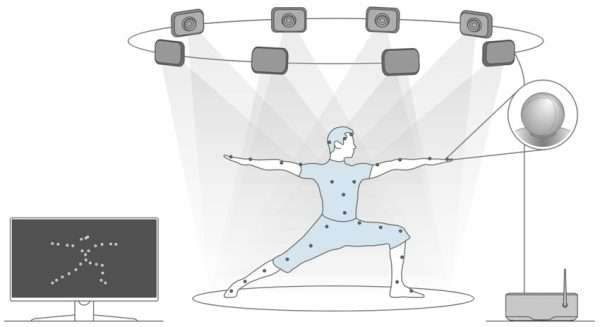
Here’s how it works:
- The performer puts on a tight suit with reflective markers placed at specific joints and body parts.
- Multiple cameras (often infrared) are set up around the capture space.
- As the performer moves, the cameras track the markers in 3D space.
- The system then reconstructs the skeleton and records precise motion data.
This method is known for its accuracy and reliability. Since the system knows exactly where each marker is, it can calculate joint positions with great precision. That’s why marker-based MoCap is still the industry standard in high-budget movies and games.
Pros of Marker-Based MoCap:
- High accuracy: Marker-based setups are extremely precise, making them great for professional animation or biomechanics research.
- Industry standard: Most big studios rely on marker-based systems, meaning there’s a wealth of experience and compatibility out there.
- Robust data: The markers give the system clear points of reference, reducing confusion in complex movements.
- Well-supported: Lots of hardware and software exist for marker-based setups, making it easier to find support or tutorials.
Cons of Marker-Based MoCap:
- Expensive: The hardware (cameras, suits, markers) can cost tens or even hundreds of thousands of dollars.
- Setup time: Placing markers on a performer can take a while, and everything has to be positioned correctly for accurate results.
- Limited flexibility: Markers can fall off, shift, or get blocked, causing errors in the capture.
- Not ideal for quick or casual use: This is more of a studio solution than something you’d whip out on a whim.
>>> Read more: How to create your MetaHumans with motion capture
What Is Markerless Motion Capture?
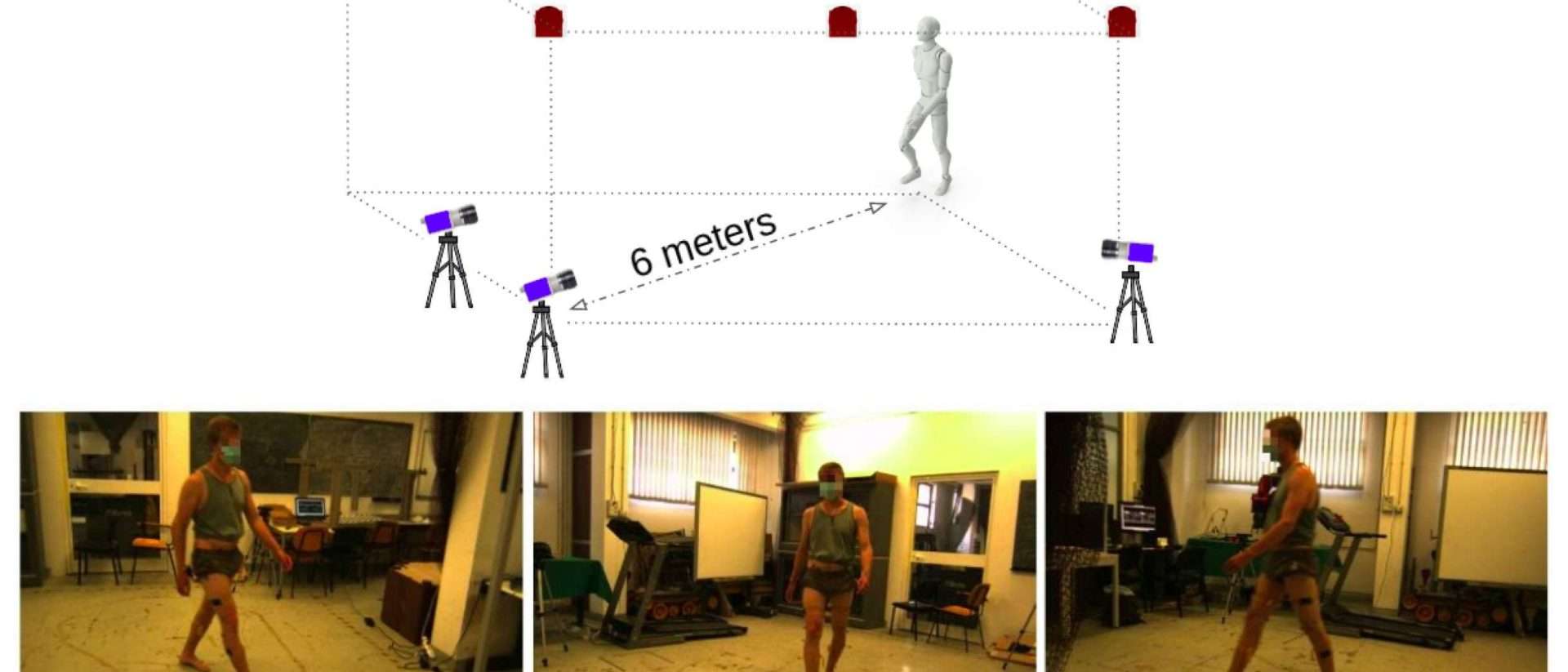
Markerless MoCap takes a totally different approach. Instead of using physical markers, it relies on computer vision and AI algorithms to track movement directly from video footage.
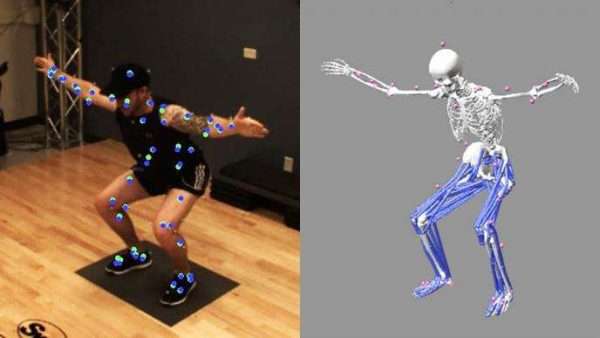
Here’s how it works:
- Cameras (they can be regular video cameras, depth cameras, or even smartphones) record a performer.
- Software analyzes the footage and identifies body parts, often using machine learning models trained to recognize human poses.
- The system reconstructs the motion in 3D without needing physical markers.
This approach has exploded in popularity recently because it’s faster, more flexible, and often much cheaper than marker-based setups. You’ve probably seen markerless MoCap being used in sports apps, fitness trackers, or even consumer-friendly tools like AI dance capture apps.
Pros of Markerless MoCap:
- No special suit required: Just record the performer in normal clothes.
- Lower cost: Many markerless solutions work with standard cameras or even smartphones.
- Faster setup: No need to attach markers, just set up cameras and start recording.
- More accessible: Great for indie creators, educators, or smaller studios.
- Scalable: Some systems can even work outdoors or with multiple performers at once.
Cons of Markerless MoCap:
- Lower accuracy (in some cases): Markerless systems may struggle with complex movements, fast motion, or occlusions (when one body part blocks another).
- Dependent on algorithms: Quality varies based on the software’s AI models.
- Lighting challenges: Poor lighting can affect results.
- Less industry adoption (so far): While growing, markerless MoCap isn’t as entrenched in blockbuster production pipelines yet.
What is The Difference Between Markerless and Marker-based MoCap?
Now that we’ve looked at both, let’s put them side by side.
| Feature | Marker-Based MoCap | Markerless MoCap |
| Hardware | Requires suits with markers and infrared cameras | Works with regular cameras (RGB or depth) |
| Accuracy | Extremely high, even for detailed motion | Good, but can struggle with fast/complex moves |
| Setup Time | Long (suit up, place markers) | Short (just set up cameras) |
| Cost | Very expensive | Much cheaper (sometimes free apps) |
| Flexibility | Studio-based, controlled environment | Can work indoors, outdoors, even with casual clothing |
| Industry Use | Hollywood, AAA games, biomechanics labs | Indie studios, sports apps, fitness, and education |
| Learning Curve | Steep, requires trained staff | Easier, often plug-and-play |
In short:
- If you need pinpoint accuracy and can afford a full studio setup, go marker-based.
- If you want speed, affordability, and flexibility, go markerless.
Real-World Use Cases
To help you see the difference more clearly, let’s look at how each system gets used in practice.

Marker-Based MoCap in Action
- Movies & Games: Studios like Weta Digital or Ubisoft use marker-based systems for creating hyper-realistic characters. Think Avatar, The Lord of the Rings, or Assassin’s Creed.
- Medical research: Biomechanics labs use marker-based MoCap to study joint movements, gait analysis, or injury rehab.
- Sports science: Elite athletes get tracked with markers to fine-tune every detail of their performance.
Markerless MoCap in Action
- Fitness apps: Apps that track your workout form (like squats or push-ups) often use markerless MoCap.
- Indie animation: Smaller studios can capture performances without expensive suits.
- Education: Teachers and students can experiment with motion data using just a camera.
- VR/AR: Real-time body tracking for avatars in games or social VR often uses markerless systems.
Which One Should You Choose?
This is the big question, right? Here’s a quick guide to help you decide:
Choose Marker-Based MoCap if…
- You’re working on a high-budget movie, AAA video game, or medical research project.
- Accuracy is non-negotiable.
- You have access to a professional studio and a budget.
Choose Markerless MoCap if…
- You’re an indie creator, educator, or hobbyist.
- You want a quick and easy setup.
- The budget is limited.
- You need portability and flexibility.
Think of it like cameras: marker-based MoCap is like a high-end cinema camera (expensive, powerful, and precise). Markerless MoCap is like a smartphone camera (easy, accessible, and good enough for most everyday needs).

>>> Read more: Markerless Motion Capture System: A Complete Guide for Beginners
How Markerless and Marker-Based MoCap Affect Your Workflow
When you’re planning a project, it’s not just about cost or accuracy; it’s about how these systems fit into your workflow. Marker-based MoCap requires more prep time (suits, calibration, marker placement), which means your schedule needs to account for longer setup sessions. Once the data is captured, though, it’s usually clean and reliable, saving time in post-production.
Markerless MoCap flips that equation. You save time upfront (no suits, no markers), but you might spend more effort in post-production cleaning up data, especially if lighting or camera angles weren’t perfect. For small teams, that trade-off often works in their favor, but bigger productions might prefer the predictability of marker-based setups.
The Future of MoCap: Is Markerless Taking Over?
Here’s the exciting part: markerless MoCap is getting better every year. Thanks to advances in AI, computer vision, and hardware, markerless systems are narrowing the gap in accuracy.
We’re already seeing indie movies and games rely solely on markerless setups, and even big studios are starting to use it for pre-visualization (rough animations before final production). With tools like iPi Soft, Move.ai, DeepMotion, and even smartphone apps entering the scene, markerless MoCap is democratizing motion capture for everyone.
But marker-based isn’t going away anytime soon. For ultra-precise work, like creating lifelike creatures in Avatar 3 or analyzing a runner’s biomechanics in a lab, markers still rule the game.
>>> Read more: Unlocking Motion Capture: How to Do Motion Capture without Suit?
Final Thoughts
So, what is the difference between markerless and marker-based MoCap? To put it simply:
- Marker-based MoCap gives you maximum precision but at a high cost in time and money.
- Markerless MoCap gives you accessibility, speed, and affordability, but sometimes with less accuracy.
It really depends on what you need. If you’re making the next blockbuster or conducting medical research, markers are your best bet. But if you’re an indie creator, teacher, or just curious about motion capture, markerless is a game-changer.
At the end of the day, both systems have their place. The exciting part is that thanks to technology, motion capture is no longer reserved for big studios—it’s becoming something anyone can play with.
FAQs about Markerless and Marker-Based MoCap
Which is more accurate: markerless or marker-based?
Marker-based is generally more accurate and reliable, especially for complex or high-speed movements. Markerless is improving, but may struggle with precision in certain conditions.
Is markerless MoCap cheaper?
Yes, markerless systems are usually much more affordable because they don’t need expensive suits or specialized cameras. Some even work with smartphones.
Can markerless MoCap be used for professional projects?
Absolutely. Many indie studios, educators, and even some professional teams use markerless MoCap. However, big-budget films and AAA games still lean on marker-based setups for accuracy.
Which is better for beginners?
Markerless MoCap is easier to start with since it requires less setup, no special suits, and lower costs.
Will markerless MoCap replace marker-based systems?
Not entirely. Markerless is becoming more powerful thanks to AI, but marker-based will remain the go-to choice when maximum precision is needed.
–
Animost – Vietnam 3D Animation Studio


hello@animost.com

More from the stage
Sep 15, 2026Behind the Scenes of HOPE Na Hong-jin Sci-Fi Action with Motion Capture
If you love wild action movies, high-stakes science fiction, and cinema that keeps your heart pounding, South Korean filmmaker Na Hong-jin’s latest project, HOPE, needs to…
Do I Own the Copyright to AI-Generated Animation?
Do you own the copyright to AI-generated animation? Learn how AI, human creativity, and platform rules affect ownership and commercial rights.
Start a project
Tell us what you need made.
Send us the details and we will come back within one business day with a scope and a price.
Start a project