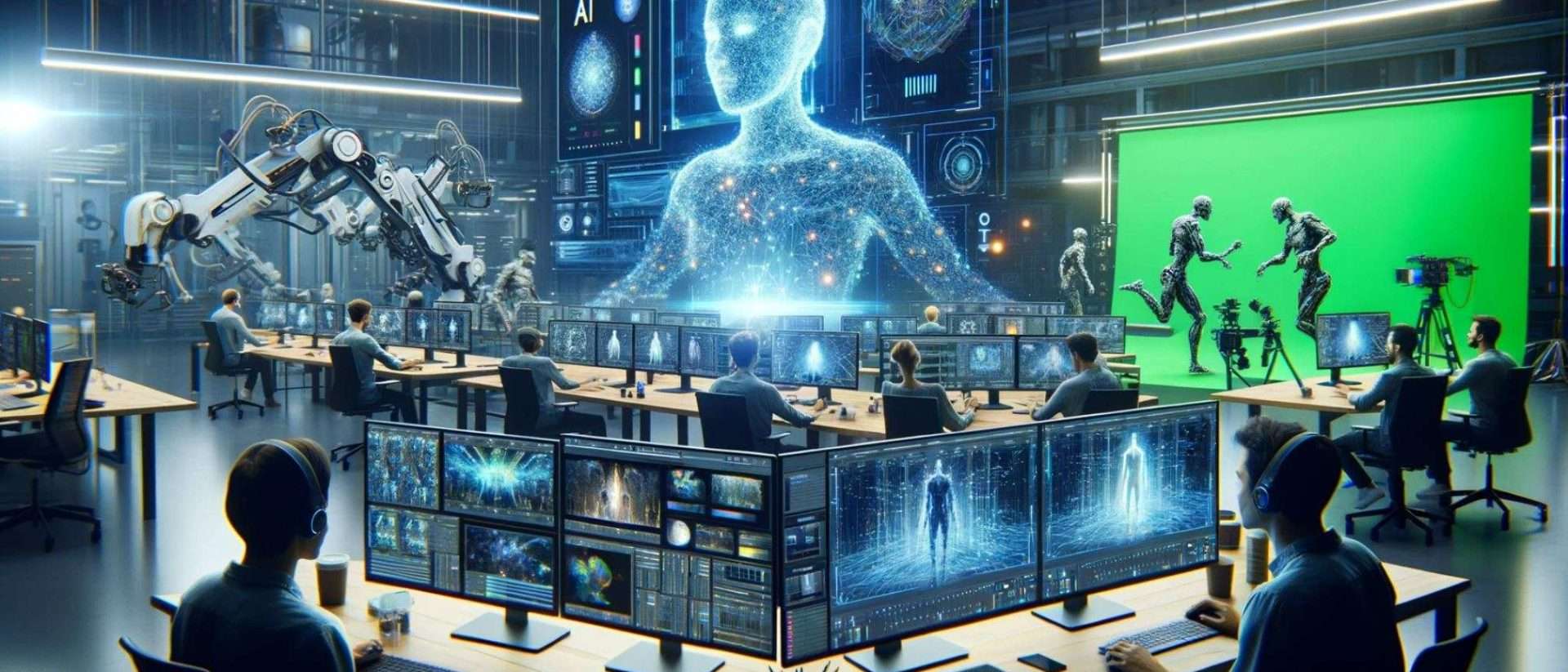
Is AI Used in VFX? Let’s Break It Down
Now, with the rise of artificial intelligence, one big question keeps popping up: Is AI used in VFX? The short answer? Yes, AI is already being used in VFX, and it’s changing the game.
But we’re not going to stop there. In this article, we’ll walk you through how AI is being used in VFX today, the benefits it brings to artists and studios, the challenges that come with it, and what the future might look like. Think of it as a behind-the-scenes tour, but instead of standing on a movie set, we’re pulling back the curtain on digital magic.
Is AI Used in VFX?
Yes, AI in VFX is already here, working behind the scenes of movies, TV shows, ads, and even video games.

Here are some iconic examples where AI played a role:
- The Irishman (2019): De-aging Robert De Niro, Al Pacino, and Joe Pesci using AI-assisted facial reconstruction.
- The Mandalorian (2020): Bringing young Luke Skywalker back with AI face replacement and voice synthesis.
- Avengers: Endgame (2019): AI tools sped up rotoscoping and background replacements in massive battle scenes.
- Gemini Man (2019): Will Smith’s younger self was created with AI-driven performance capture and face synthesis.
Now, let’s break down the main areas where AI is transforming the game:
Rotoscoping Made Easy
Rotoscoping is one of the most tedious jobs in VFX. It’s the process of cutting out characters or objects frame by frame, allowing artists to replace the background or add effects. Normally, this can take weeks.
AI tools now automate a lot of this by detecting edges, tracking movements, and separating characters from their backgrounds with high accuracy. That means VFX teams can focus more on the creative parts instead of spending hours on repetitive tasks.
>>> Read more: The Future of Animation Technology: Motion Capture AI
De-Aging and Face Replacement
Ever noticed how actors look younger in some movies, like Robert De Niro in The Irishman? That’s AI at work. Instead of manually painting every wrinkle away, AI algorithms analyze facial features, apply smoothing, and even generate younger versions of actors with deep learning.

The same goes for face replacements, think stunt doubles who seamlessly take on the actor’s face during action scenes. AI handles this in a way that looks incredibly natural.
>>> Read more: How AI Is Shaking Up 3D Animation (And Why You Shouldn’t Ignore It)
Creating Digital Characters
AI can study real human movements and expressions, then apply them to digital models. This makes creating lifelike characters easier and more believable. For example, machine learning helps animators capture subtle details in a smile, a frown, or even the way someone blinks.
Environment Generation
Need a massive city, alien planet, or fantasy forest? AI can generate realistic environments much faster than traditional methods. By training on thousands of real-world photos and landscapes, AI can produce textures, lighting, and details that look photorealistic, saving time on modeling every tiny detail by hand.
>>> Read more: 3 Best 3D Animation Techniques That Transform the World
Motion Capture Enhancement
Motion capture (mocap) is essential for creating realistic movement in characters. AI improves this process by cleaning up noisy data, filling in gaps, and making sure movements look smooth and natural. In some cases, AI can even generate full-body motion without the need for expensive mocap suits.
Upscaling and Restoring Footage
Ever watched an old movie remastered in 4K? AI is behind a lot of that magic. It can upscale lower-resolution footage, sharpen details, and even colorize black-and-white scenes. This is huge for film restoration and streaming platforms looking to bring classics to modern screens.

Benefits of AI in VFX
So, why is everyone so excited about AI in VFX? Here are a few reasons:
- Time Savings: What used to take weeks can now be done in hours.
- Lower Costs: Smaller studios and indie creators can access tools that were once only available to big Hollywood productions.
- More Creativity: With repetitive tasks automated, artists can spend more time on creative storytelling and visual design.
- Consistency: AI tools reduce errors, ensuring cleaner, more polished results.
- Accessibility: Even YouTubers and small creators can now add professional-level effects with AI-powered software.
Challenges of Using AI in VFX
Of course, it’s not all sunshine and rainbows. There are some big challenges we need to talk about:
- Quality Control: AI isn’t perfect. Sometimes, its output still needs heavy tweaking by human artists.
- Ethical Concerns: Deepfakes, de-aging, and digital resurrections raise tough questions about consent and authenticity.
- Job Security: Some artists worry that automation could replace human creativity. (But really, AI is more of a collaborator than a replacement.)
- Learning Curve: Studios need time to adapt, train teams, and integrate AI into existing workflows.
The Future of AI in VFX
So, what’s next? We can only imagine how much more advanced AI will become in the next 5 – 10 years. Here’s where we see things heading:
- Real-Time VFX: Imagine AI generating effects instantly while filming, so directors can see the final shot right on set.
- AI-Generated Worlds: Entire environments could be created automatically with just a few prompts.
- Hyper-Realistic Digital Actors: We might reach a point where you can’t tell a digital character from a real actor.
- Faster Indie Productions: As AI tools become more accessible, small teams will create visuals that rival big studios.
Should You Worry About AI Replacing Artists?
This is the elephant in the room, right? If AI is doing all these cool things, what happens to human VFX artists?
Here’s our take: AI is a tool, not a replacement.
Think about Photoshop when it first came out. Did it replace artists? Nope, it gave them more power. The same goes for AI in VFX. We’ll always need human creativity, storytelling, and artistic vision. AI just takes care of the heavy lifting, leaving more space for imagination.
Final Thoughts: Is AI Used in VFX?
So, back to our main question: Is AI used in VFX?
Absolutely. From rotoscoping to de-aging, motion capture to crowd simulations, AI is already making a huge impact. It speeds things up, lowers costs, and makes mind-blowing visuals more accessible than ever.
But more importantly, AI isn’t here to steal jobs; it’s here to push the industry forward. The magic of movies has always been about combining technology with human creativity, and AI is just the next step in that evolution.
–
Animost – Vietnam 3D Animation Studio


hello@animost.com

More from the stage
Sep 23, 2026Next-Level AI Facial Mocap: The Ultimate Guide to Reallusion AccuFACE 2
When Reallusion released the original AccuFACE plugin for iClone, it changed the game by offering simple, webcam-based AI facial tracking without the bulky gear. Now, AccuFACE…
Remembering Tim Curry: Celebrating the Unforgettable Legacy of a True Acting Legend
Legendary actor Tim Curry passed away at age 80. Explore his incredible life, iconic movie characters, and legendary voice-acting roles.
Start a project
Tell us what you need made.
Send us the details and we will come back within one business day with a scope and a price.
Start a project