
Do Games Use Motion Capture? How Mocap Brings Video Games to Life
Do games use motion capture? Motion capture (mocap) is a game-changer in the world of video games. It’s how developers make characters move, fight, and even show emotions in a way that feels real. From epic fight scenes to emotional cutscenes, this tech helps bring games to life. But how does it actually work, and why do game studios use it? Let’s break it down and see how motion capture makes gaming more immersive than ever.
Do Games Use Motion Capture?
Yes. Video games use motion capture a lot! It helps make characters move, fight, and even show emotions more realistically. From intense action scenes in God of War to lifelike sports moves in FIFA, mocap brings games to life and makes everything feel smoother and more immersive.

Motion capture is basically how game developers make characters move and act more like real people. They record actors wearing special suits and use that data to animate in-game characters. This is why games like The Last of Us have such emotional cutscenes or why Mortal Kombat fights feel so smooth. Even sports games use mocap to get players’ movements just right. While it can be pricey, it saves time compared to animating everything by hand.
How Motion Capture is Used in Video Games
- Character Animation
Motion capture allows developers to record real human movement and transfer it to digital characters, creating more believable actions such as running, jumping, and climbing. For example, The Last of Us Part II and Red Dead Redemption 2 showcase fluid animation and realistic character interactions that enhance player immersion.
- Facial Expressions & Lip Syncing
By capturing subtle facial movements, studios can bring characters to life with realistic expressions and emotions. Lip syncing also becomes more accurate when game developers track and replicate mouth movements. Games like Detroit: Become Human excel in this area, allowing for nuanced performances that deepen narrative impact, while L.A. Noire was a pioneer in using facial capture for detective-style interrogation scenes.

- Cutscenes & Cinematics
In-game cutscenes often benefit greatly from motion capture. Actors perform entire scenes, including dialogue and action sequences, which are then translated directly into the game. God of War (2018) uses this technique to immerse players in its movie-like storytelling, turning the bond between Kratos and Atreus into an emotionally compelling experience.
>>> Read more: Cinematography In a Video Game Cinematic Trailer
- Combat & Stunts
Action-oriented titles rely on mocap to deliver dynamic combat and stunt work. Martial artists and stunt professionals wear specialized suits to capture intricate fighting styles and complex movements. Mortal Kombat 11, for instance, preserves fluid combat flow by replicating real martial arts techniques, while the Assassin’s Creed series captures parkour, stealth, and acrobatic feats to match its historical action themes.
- Sports Games
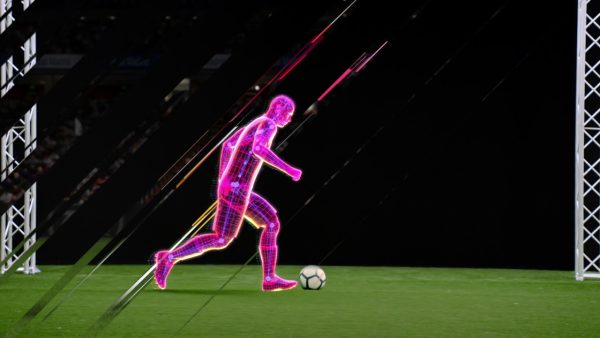
Sports franchises like FIFA, NBA 2K, and Madden NFL record professional athletes to replicate signature moves, running styles, and other unique traits. This data helps designers accurately recreate the nuances of each sport, resulting in more realistic and responsive gameplay.
- Non-Human Character Animations
Although motion capture naturally suits human characters, it can also be adapted to portray creatures or robots. Actors might crawl or use props to simulate the body structure of a fantasy being, allowing developers to mix human performance with additional animation for non-human models. The Last Guardian, for example, used mocap reference to animate Trico, blending animal-like behavior with human-led performance.
- Crowd & Background Animations
To populate vibrant open worlds, studios often record groups of actors performing simple interactions or idle movements. These recordings inform the background behaviors of non-playable characters, giving them a sense of individuality. Games like Red Dead Redemption 2 use this technique to make towns and wilderness areas feel more authentic.
- VR & Motion-Based Games
Virtual reality experiences often use real-time motion capture to track player movements and incorporate them directly into the game world. By wearing motion-tracking devices, players can see their actions mirrored on screen. Titles like Half-Life: Alyx heighten immersion with realistic hand tracking, and Beat Saber captures rhythmic arm movements for a kinetic gameplay experience.

>>> Read more: Pros and Cons of Motion capture? The development of Motion capture Asia
Challenges & Limitations of Mocapture in Games
While it brings realism and efficiency, it also comes with challenges that developers have to work around.
- High Costs & Expensive Equipment
Mocap requires specialized cameras, suits, and software, making it expensive. A full setup can cost hundreds of thousands of dollars, which is why indie studios often can’t afford it. Renting a mocap studio is an option, but it still adds to production costs.
- Time-Consuming Cleanup & Refinement
Raw mocap data isn’t perfect. Even with high-end setups, I’ve had to spend hours cleaning up jittery animations, fixing unnatural limb movements, and ensuring everything blends smoothly into gameplay. This post-processing takes time and skill.
- Limitations in Fantasy & Creature Animation
Mocap works great for human characters, but what about dragons, aliens, or giant monsters? We can capture human actors mimicking their movements, but animators still have to manually tweak and refine them to fit non-human creatures.

- Rigging & Integration Issues
Capturing movement is one thing: getting it to work with the character rig is another. If the mocap data doesn’t match the skeleton of the 3D model, animations can break, leading to floating limbs or unnatural poses. I’ve seen cases where an actor’s movement didn’t translate well due to differences in proportion between the real and digital character.
- Dependence on Skilled Actors
Mocap is only as good as the performers. A stiff or unnatural performance can make animations look robotic. This is especially critical for emotional cutscenes if an actor doesn’t sell the emotion, the animation won’t either.
- Limited by Studio Space & Equipment
Mocap needs a controlled environment with cameras placed correctly to avoid occlusion (where body parts block markers from the camera’s view). If actors move too fast or interact with objects, data can get lost, requiring reshoots.
- Realism Can Sometimes Feel Too Perfect
Ironically, too much realism can make animations look unnatural in a game setting. Real human motion includes subtle variations, but games sometimes need exaggerated movements to feel responsive. That’s why mocap often needs some hand-animation adjustments to fit the game’s style.

>>> Read more: Mocap Cleanup and Editing: Transform Raw Data into Stunning Animations
Future of Mocap in Gaming
Motion capture is evolving fast, and the future looks even more exciting. AI-driven mocap and markerless technology are making it more accessible, reducing the need for expensive suits and cameras. Soon, developers may capture movement using just a smartphone or VR headset.
Real-time mocap will also improve, allowing developers to instantly see animations applied to characters without lengthy post-processing. AI will help refine animations, reducing cleanup time.
As VR, AR, and metaverse gaming grow, mocap will play a bigger role in player-driven experiences. The future of gaming will be more immersive, seamless, and interactive than ever.
Wrap Up
Motion capture has become a major force in modern game development, making characters move, fight, and express emotions more realistically than ever. Whether it’s cinematic storytelling, fluid combat, or lifelike sports animations, mocap plays a huge role in bringing virtual worlds to life. One thing’s for sure: motion capture isn’t just the present of gaming; it’s the future.
–
Animost – Vietnam 3D Animation Studio


hello@animost.com

More from the stage
Sep 15, 2026Behind the Scenes of HOPE Na Hong-jin Sci-Fi Action with Motion Capture
If you love wild action movies, high-stakes science fiction, and cinema that keeps your heart pounding, South Korean filmmaker Na Hong-jin’s latest project, HOPE, needs to…
What Are the Limitations of Motion Capture? A Deep Look for Creators
What are the limitations of motion capture? We break down the real challenges, from cleanup time issues to cost, realism limits, and more.
Start a project
Tell us what you need made.
Send us the details and we will come back within one business day with a scope and a price.
Start a project