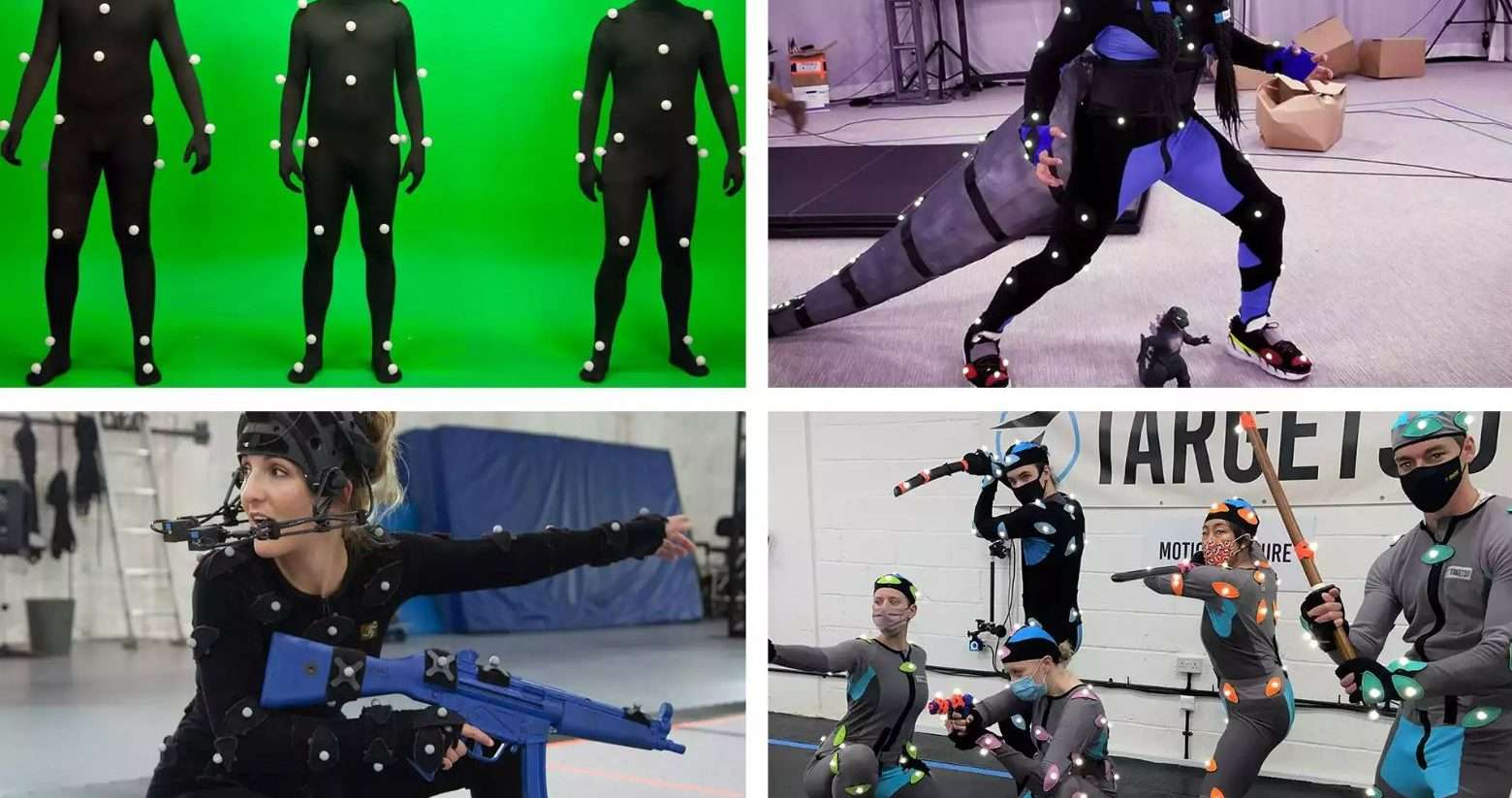
How Accurate Is Motion Capture? A Dive into Precision and Technology
Motion capture (MoCap) is a game-changer in animation, gaming, sports, and even medical research. But how accurate is motion capture? The answer depends on the technology used whether it’s optical, inertial, or hybrid systems. Factors like hardware quality, calibration, and environmental conditions also play a role. In this deep dive, we’ll explore MoCap accuracy, its real-world applications, and what affects precision in different industries.
Types of Motion Capture Systems & How Accurate Is Motion Capture?
Some mocap systems prioritize precision, while others focus on mobility, cost-effectiveness, or ease of use. The choice of MoCap system depends on factors like environment, project requirements, and budget. Below is an overview of the main types of motion capture systems and how accurate they are in different scenarios.

Optical Motion Capture (Marker-Based)
This system uses multiple infrared cameras to track reflective markers placed on a subject. It provides sub-millimeter accuracy (0.3–1 mm) in controlled environments, making it the gold standard for film, gaming, and sports biomechanics. However, occlusion issues, marker swapping, and the need for a dedicated studio setup can be drawbacks. Despite its high cost, it remains the most precise option for capturing complex motion.
>>> Read more: The Future of Animation Technology: Motion Capture AI
Optical Markerless Motion Capture
Instead of markers, this system relies on AI-driven computer vision and depth sensors to track movement. While historically less accurate than marker-based solutions (1–3 cm accuracy), recent advancements in machine learning are improving precision.
It is more convenient since it doesn’t require special suits or studios, but accuracy can fluctuate due to lighting, camera quality, and background clutter. It is commonly used for fitness apps, research, and pre-visualization in film and animation.
>>>Read more: FX and animation studios increasing favor for virtual production and workstations
Inertial Motion Capture (IMU-Based)
IMU-based systems use wearable sensors (accelerometers and gyroscopes) to measure movement without external cameras. They work well in any environment and are portable, making them ideal for VR, sports training, and military simulations.

However, accuracy (1–5 cm) can degrade over time due to sensor drift, and rapid movements may introduce errors. Despite these limitations, they are cost-effective and widely used in applications where absolute precision is not critical.
>>> Read more: Optical vs Inertial Motion Capture: Which is Right for Your Project?
Magnetic Motion Capture
This method tracks movement using electromagnetic fields, eliminating occlusion issues found in optical systems. It provides 1–2 cm accuracy but is highly sensitive to metal objects and electronic interference. Best suited for controlled indoor environments, it is often used in specialized research and industrial applications.
Hybrid Motion Capture
Combining two or more tracking methods, hybrid systems improve overall accuracy and reliability. For example, optical and inertial fusion can counteract occlusion problems while reducing sensor drift. These systems offer high precision but come with increased complexity and cost. They are often used in high-end film production and advanced biomechanics research.
Factors Affecting Motion Capture Accuracy
When working with motion capture, you and I both want the most accurate results possible. But achieving high accuracy isn’t just about using the best technology; it also depends on how well the system is set up, the environment, and even the movements being captured. Let’s break down the key factors that affect MoCap accuracy so you can get the best performance from your setup.

Hardware Quality
The quality of the equipment you use makes a huge difference. If you’re using an optical system, high-resolution cameras with fast frame rates will capture movement more precisely. If you’re working with inertial sensors, the sensitivity and calibration of IMUs matter a lot. I’ve seen low-quality cameras and sensors cause all sorts of motion artifacts, so investing in reliable hardware is essential if you want clean, accurate data.
Calibration and Setup
No matter how expensive your equipment is, if it’s not set up correctly, you won’t get good results. For optical MoCap, cameras need to be positioned so they minimize occlusion (when markers are blocked). If you’re using an inertial system, proper sensor alignment helps prevent drift. I always make sure to double-check calibration before recording, because a small setup mistake can throw off an entire session.
Environmental Factors
The space you use for motion capture can either help or hurt your accuracy. If you’re using an optical system, lighting conditions matter; too much brightness or reflections can mess with marker detection. Magnetic and inertial systems are sensitive to interference from metal objects and electronic devices. I’ve learned the hard way that even a seemingly minor environmental factor can cause unexpected tracking errors.

Post-Processing and Data Refinement
Even if your MoCap system is well-calibrated, you’ll probably need to clean up the data afterward. Smoothing algorithms help reduce jitter, while retargeting tools fix issues like marker swapping or sensor drift. I always spend time refining the data because raw motion capture can look unnatural without proper post-processing. If you want smooth and believable animations, you should too.
Human Factors
The way you or your performers move also affects accuracy. If a suit isn’t fitted correctly or markers aren’t placed properly, the data won’t be reliable. Fast, sudden movements can cause motion blur or tracking errors, especially in inertial and optical systems. When I work with MoCap, I make sure the actors understand how to move within the system’s limits to get the cleanest results possible.
Motion Capture Accuracy in Different Applications
Depending on how you and I use it, the level of accuracy required can vary. Let’s take a look at how MoCap accuracy plays a role in different fields.

Film & Animation
Movies and animated films rely on high-precision MoCap, especially for facial expressions. Optical marker-based systems provide sub-millimeter accuracy, ensuring lifelike performances. Films like Avatar and Marvel productions use MoCap extensively to capture even the smallest details. Any inaccuracies in facial or body motion can make a character look unnatural, so studios prioritize the most precise tracking systems available.
Video Games
Games need realistic animations, but real-time performance is also crucial. Sports titles like FIFA and NBA 2K use MoCap to replicate athlete movements. Optical systems offer the best accuracy, but inertial MoCap is common for larger, more dynamic captures. Minor inaccuracies can lead to stiff or unnatural character motions, making data refinement essential for fluid in-game movement.
Medical & Biomechanics Research
Medical applications demand extreme precision, as MoCap is used for gait analysis, prosthetics, and rehabilitation. A 1 cm error can impact results, so optical marker-based systems are the preferred choice. Often combined with force plates, MoCap helps in assessing movement disorders and treatment effectiveness. Accuracy is critical since incorrect data can lead to flawed medical evaluations.

Virtual Reality (VR) & Simulations
VR and training simulations require both accuracy and responsiveness. Inertial MoCap is popular since it works without cameras, making it ideal for military, medical, and industrial training. However, sensor drift can reduce accuracy over time. In real-time applications, balancing precision with performance is key to avoiding lag and ensuring natural movement interactions in VR environments.
Conclusion
Motion capture accuracy depends on the technology used, the setup, and the intended application. Optical systems provide the highest precision but require controlled environments, while inertial systems offer flexibility at the cost of occasional drift. Hybrid solutions aim to balance accuracy and convenience. As technology advances, we can expect even greater accuracy and realism in motion capture.
–
Animost – Vietnam 3D Animation Studio


hello@animost.com

More from the stage
Sep 15, 2026Behind the Scenes of HOPE Na Hong-jin Sci-Fi Action with Motion Capture
If you love wild action movies, high-stakes science fiction, and cinema that keeps your heart pounding, South Korean filmmaker Na Hong-jin’s latest project, HOPE, needs to…
Do I Own the Copyright to AI-Generated Animation?
Do you own the copyright to AI-generated animation? Learn how AI, human creativity, and platform rules affect ownership and commercial rights.
Start a project
Tell us what you need made.
Send us the details and we will come back within one business day with a scope and a price.
Start a project